


News
Industry Insights
Stay informed with chemical market insights, product knowledge and industry developments.
recommend
 Amino Acids in Industrial Formulations: Functions, Grades, and Selection Criteria
 Selecting Quaternary Ammonium Compounds for Surface Disinfection Applications
 How Custom Chemical Packaging Reduces Leakage, Compliance, and Transport Risks
 Ferroalloy Procurement: Evaluating Composition, Impurities, and Delivery Reliability



Send Us A Message
Chemical Logistics Services: Compliance Requirements for Hazardous Material Shipments
Compliance Starts With Classification, Not With the Carrier Booking
Hazardous material shipments fail compliance most often before they reach the loading area. The underlying problem is usually an incorrect or incomplete determination of the material’s transport status: the wrong UN number, an outdated safety data sheet, an overlooked subsidiary hazard, or packaging selected for commercial convenience rather than the assigned packing group. Once that error enters booking data, labels, documents, and warehouse instructions, it can create a chain of non-conformities that is difficult to correct under shipment deadlines.
Chemical logistics services must therefore treat dangerous goods compliance as a controlled information process as well as a physical handling process. Product quality, transport classification, package performance, hazard communication, and modal restrictions must describe the same material in the same condition. A shipment may contain a high-purity chemical that meets its specification perfectly, yet still be non-compliant if the transport documentation identifies the wrong concentration, flash point, packing group, or net quantity.
The internationally recognized starting point is the UN Recommendations on the Transport of Dangerous Goods, commonly called the UN Model Regulations. These recommendations provide the basic framework for classifying dangerous goods and assigning UN numbers, proper shipping names, hazard classes, packing groups, labels, marks, and packaging instructions. They are implemented through mode-specific and national regulations rather than applied as a single universal rulebook.
For cross-border chemical movements, the applicable requirements normally depend on the transport chain:
- Road: ADR in much of Europe, alongside domestic dangerous goods rules in other jurisdictions.
- Rail: RID for international rail carriage in Europe and connected territories.
- Sea: the International Maritime Dangerous Goods (IMDG) Code.
- Air: the ICAO Technical Instructions, operationalized by many carriers through the IATA Dangerous Goods Regulations (IATA DGR).
- United States transport: the Hazardous Materials Regulations in 49 CFR, where applicable.
A shipment moving from a production facility to a port, then by sea and onward by road, is not compliant merely because its ocean documentation is correct. Each leg must satisfy the rules applicable to that mode, including any multimodal documentation conditions, quantity limits, segregation requirements, and carrier-specific acceptance procedures.
Transport Classification Must Reflect the Actual Shipped Product
Transport classification is not simply copying hazard phrases from an SDS. The Globally Harmonized System of Classification and Labelling of Chemicals (GHS) and dangerous goods transport regulations are related, but they serve different purposes. GHS focuses on workplace and consumer hazard communication, while transport rules focus on risks during carriage, including fire, pressure release, reactivity, environmental harm, and consequences of an incident in a confined transport environment.
The SDS remains a critical source document, especially Section 14, but it must be controlled rather than accepted without review. The transport information should match the product’s current formulation, concentration, physical state, and test data. For example, a solvent blend can have a different flash point from one of its constituent substances. An aqueous solution may be assigned a different packing group from the neat chemical. A high-purity grade may require separate review when impurities materially affect the transport hazard classification.
The core classification record should establish, at minimum:
- UN number and proper shipping name;
- primary hazard class or division and any subsidiary risk;
- packing group, where assigned;
- physical form, concentration, and relevant technical name;
- marine pollutant status for sea transport;
- limited quantity, excepted quantity, or other applicable relief provisions;
- special provisions, temperature-control conditions, and incompatibility restrictions.
Classification becomes more complex for mixtures, samples, waste chemicals, stabilized materials, polymerizing substances, organic peroxides, lithium battery-powered equipment, and products shipped under elevated or controlled temperatures. These categories should not be handled through assumptions based on a similar commercial product. A small change in formulation, inhibitor level, water content, pressure, or temperature can change the applicable entry or introduce additional transport controls.
For quality systems, the classification file should have document ownership, revision control, approval criteria, and a trigger for reassessment. A revised SDS, formulation adjustment, new supplier of a raw ingredient, change in packaging size, change in destination, or introduction of air freight can all require a renewed regulatory review.
UN Packaging Is a Performance Requirement, Not a Generic Container Choice
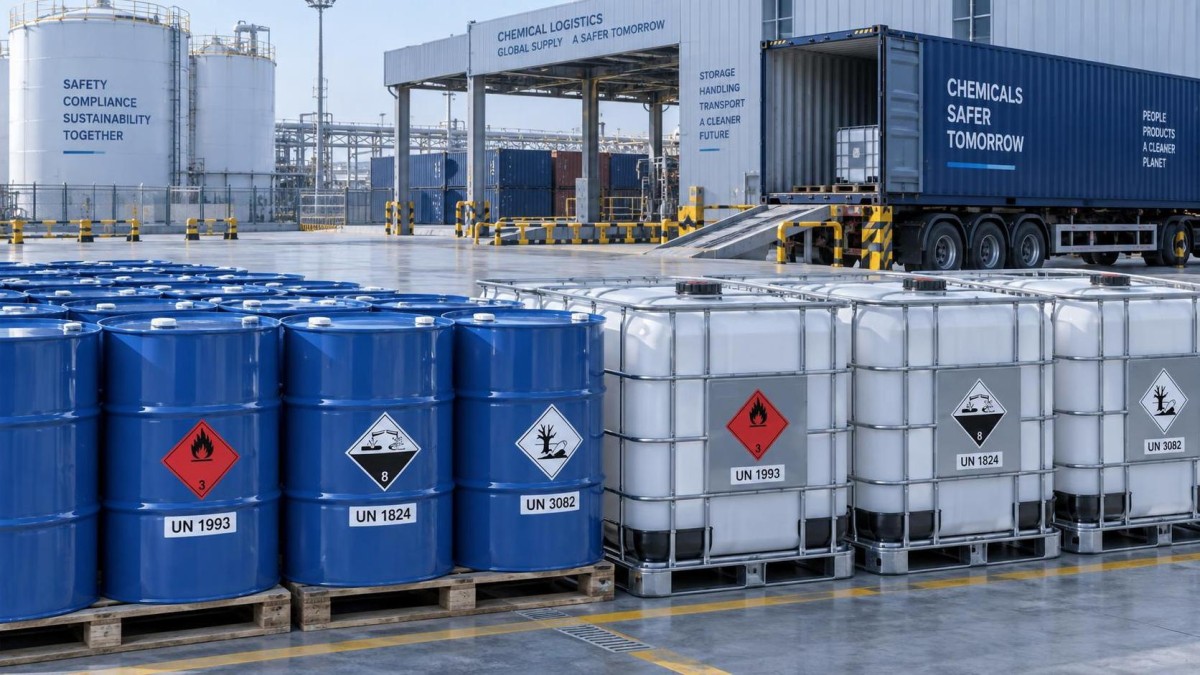
Packaging selection is where chemical quality assurance and transport compliance meet directly. Dangerous goods packaging must do more than prevent ordinary leakage. Where UN performance packaging is required, the package must be of a design type tested and approved for the relevant hazard level and packing group. The UN mark on a drum, jerrican, box, combination package, or intermediate bulk container (IBC) indicates that the design type has met specified performance tests under defined conditions. It does not mean every filling operation using that package is automatically compliant.
The package must be used within the conditions for which it was approved. These conditions can include the permitted packing group, maximum gross mass or stacking load, liquid density or relative density, hydrostatic pressure, inner packaging configuration, and closure method. A compatible container can still become non-compliant if it is overfilled, fitted with an unapproved closure, used with a different inner bottle arrangement, or filled with a liquid whose vapor pressure or chemical action exceeds the package’s intended use.
Chemical compatibility requires separate attention. Packaging material must resist the chemical during the full expected period of transport, including temperature exposure, vibration, handling, and possible delays. A package that appears sound immediately after filling may soften, crack, swell, embrittle, or lose closure integrity after sustained contact with an aggressive solvent, strong oxidizer, corrosive acid, alkaline solution, or moisture-sensitive material.
For high-purity chemicals, package suitability also has a product-quality dimension. Container extracts, particulate shedding, moisture ingress, oxygen permeability, and adsorption can compromise analytical purity even when the package remains structurally intact. This is especially relevant for electronic-grade, pharmaceutical intermediate, catalyst, and laboratory chemicals. A compliant package must protect both transport safety and the defined product specification; neither objective substitutes for the other.
Control checks before release should verify the packaging code, approved configuration, visible condition, closure application, fill level, tamper evidence where required by the quality system, and legibility of package marks. Reconditioned drums and reusable IBCs deserve particular scrutiny because inspection intervals, cleanliness, valve condition, previous contents, and residual contamination can affect both safety and product integrity.
Marks and Labels Need to Remain Correct Throughout the Transport Chain
Hazard labels, handling labels, UN numbers, proper shipping names, orientation arrows, overpack marks, marine pollutant marks, and other package markings communicate critical information to handlers and emergency responders. Their accuracy is not a cosmetic requirement. Missing or obscured hazard communication can lead to rejection at a terminal, improper stowage, incompatible loading, or a delayed emergency response.
Several practical errors recur in export movements. One is applying labels based on warehouse stock codes rather than the approved transport classification. Another is marking an outer package without repeating required markings on an overpack when those markings are no longer visible. A third is using labels that are technically correct at dispatch but not durable enough to remain legible after moisture exposure, abrasion, condensation, or container handling.
Overpacks require careful review. If several packages are placed inside shrink wrap, a pallet box, or another enclosure, the required marks and labels must be reproduced on the outside unless they remain visible. The word “OVERPACK” is required in many situations under the applicable modal rules. In addition, overpacking must not conceal leakage, impair package orientation, or create a combined weight that exceeds safe handling limits.
Labels and marks should be checked against the final physical package, not only against the documentation template. A declaration may list Class 8 with a subsidiary Class 6.1 risk, while the package displays only the corrosive label. That gap can invalidate the shipment even if the container and paperwork are otherwise correct.
Documentation Is a Controlled Safety Record
Dangerous goods documents convert technical classification into instructions for carriers, terminals, customs processes, and emergency response. The document format varies by mode, but the required description generally follows a regulated sequence: UN number, proper shipping name, primary hazard class, subsidiary risk where applicable, packing group, quantity and type of package, and additional information required for the mode.
For sea freight, the IMDG Code requires a dangerous goods transport document and may require a container or vehicle packing certificate when a freight container or vehicle has been packed with dangerous goods. For air transport, the shipper’s declaration requirements are particularly strict, and the operator may impose additional acceptance standards. Air transport also applies tighter quantity limitations and packaging instructions for many chemicals, so an item acceptable by sea may not be acceptable on a passenger aircraft, cargo aircraft, or any air service.
Document consistency is a central control point. The SDS, commercial invoice, packing list, dangerous goods declaration, carrier booking, package labels, and export filing should not present conflicting product identities or quantities. Commercial names may be used on invoices, but they do not replace the regulated proper shipping name in dangerous goods documentation. Where a technical name is required, it must be sufficiently specific to identify the hazardous constituent without exposing proprietary information beyond what the regulations require.
A common administrative mistake is treating the SDS as the shipping document. It is not. The SDS supports hazard communication and classification review, but it does not replace the legally required transport document or shipper certification where those are required.
Segregation, Loading, and Container Packing Are Often the Weakest Controls
Compliance continues after packages have passed inspection. Incompatible dangerous goods must not be loaded, stored, or stowed together where the governing rules prohibit or restrict that arrangement. The practical concern is not limited to obvious combinations such as acids and alkalis. Oxidizers, flammables, toxic substances, water-reactive materials, organic peroxides, and self-reactive substances may require specific separation or stowage measures.
Sea freight creates additional complexity because segregation must be assessed within the freight container and, in some cases, in relation to other cargo on the vessel. The IMDG Code includes segregation provisions that can depend on class, subsidiary risk, packing group, special provisions, and stowage category. A full container load packed correctly at origin can still face port rejection if its declaration does not allow the terminal or vessel planner to apply the required segregation controls.
Container packing should also account for load distribution, blocking and bracing, package orientation, ventilation where required, access to emergency information, and protection from heat or direct sunlight when relevant. Leaking packages, unsecured drums, unprotected IBC valves, and poorly distributed pallet loads create operational hazards even when the classification and documents are correct.
Training, Competence, and Change Control Determine Whether Compliance Is Repeatable
Dangerous goods rules place responsibilities on multiple parties, including consignors, packers, loaders, carriers, freight forwarders, and consignees. Responsibilities cannot be transferred away simply because a logistics provider has been appointed. The party offering the material for transport must ensure that the shipment information and preparation are correct for its assigned role under the applicable regulations.
Training must be relevant to the function performed. Personnel who classify chemicals, fill packages, apply marks, prepare declarations, load containers, or approve shipment release need role-specific instruction and recurring training where regulations require it. Training records should demonstrate the scope of competence, not merely attendance at a general awareness course.
Effective chemical logistics services rely on release controls that connect technical, quality, and operational data. A practical release review confirms the current classification, packaging authorization, package condition, marks and labels, documentation, modal restrictions, segregation instructions, and carrier acceptance requirements before the cargo is handed over. Where a discrepancy is found, the shipment should be stopped and corrected at the source rather than amended informally after booking.
The important compliance standard is not whether a shipment has moved without incident before. It is whether every package can be shown to have been classified, packed, marked, documented, and handled according to the rules that apply to its actual journey. That discipline protects people and the environment, preserves chemical quality, and reduces the avoidable disruptions that make hazardous material logistics unreliable.