


News
Industry Insights
Stay informed with chemical market insights, product knowledge and industry developments.
recommend
 Amino Acids in Industrial Formulations: Functions, Grades, and Selection Criteria
 Selecting Quaternary Ammonium Compounds for Surface Disinfection Applications
 How Custom Chemical Packaging Reduces Leakage, Compliance, and Transport Risks
 Ferroalloy Procurement: Evaluating Composition, Impurities, and Delivery Reliability


Send Us A Message
How Custom Chemical Packaging Reduces Leakage, Compliance, and Transport Risks
Leakage, compliance failures, and transport damage are often treated as separate supply-chain problems. In chemical projects, they usually originate from the same decision gap: packaging was selected as a container purchase rather than as a controlled interface between the chemical, the handling process, and the transport route.
Custom chemical packaging reduces risk when it is designed around the actual shipment profile: product chemistry, concentration, purity requirement, fill volume, container orientation, transport mode, climate exposure, handling equipment, and destination rules. A drum that is acceptable for a non-hazardous aqueous solution may be unsuitable for an oxidizer, a solvent with high permeation potential, a moisture-sensitive powder, or a high-purity material that can be contaminated by its own closure system.
The practical objective is not to specify the most robust package in isolation. It is to define a package system that remains chemically compatible, mechanically sound, identifiable, and legally transportable from filling through final use. That system includes the primary container, closure, gasket or liner, tamper evidence, labels, overpack where needed, pallet arrangement, and supporting documentation.
Leakage begins with incompatibility, not just weak packaging
A leaking chemical container is not always the result of rough handling. Mechanical damage is one cause, but chemical interaction with the packaging system can create slower and less visible failure modes. Solvent attack can soften or swell polymer components. Acids and alkalis can degrade certain materials or attack metallic fittings. Oxidizing substances can be incompatible with organic absorbents, liners, or closure components. Hygroscopic products can pull moisture through insufficient barriers, while volatile materials may permeate through a polymer wall even when the container appears intact.
This is why container material alone is not a sufficient specification. “HDPE drum,” for example, does not describe the grade of resin, wall thickness, molding design, permeability behavior, closure configuration, gasket chemistry, or any fluorination or barrier treatment. Nor does a steel drum specification establish compatibility with every solvent, corrosive liquid, or moisture-sensitive chemical.
A sound compatibility assessment considers the full product formulation rather than a product family name. Concentration, water content, impurities, temperature, and anticipated storage duration can change chemical behavior. A diluted acid and a concentrated acid may place very different demands on a closure liner. A high-purity solvent can be chemically compatible with a package but still fail a project requirement if extractables, particles, moisture, or trace metals migrate into the contents.
For materials with elevated purity requirements, packaging selection should also distinguish between product protection and transport safety. A package can pass dangerous-goods transport requirements while introducing unacceptable contamination. Conversely, a clean primary container may still require stronger outer protection to withstand cross-border logistics.
The closure is often the critical component
Project teams frequently focus on drum, pail, bottle, or intermediate bulk container selection while giving less attention to the closure assembly. Yet closures are exposed to repeated opening, torque variation, vibration, pressure changes, and direct chemical contact. A container wall may be suitable while its cap liner, O-ring, plug seal, or dispensing fitting is not.
Closure selection should account for:
- chemical resistance of gaskets, liners, seals, and valve components;
- required torque range and the method used to verify it at filling;
- pressure generation from temperature changes, decomposition, off-gassing, or vapor pressure;
- the need for vented closures, which must be specifically suitable for the chemical and the approved transport configuration;
- reclosure requirements after sampling or partial use at the receiving site;
- tamper-evidence requirements and the need to detect unauthorized opening in transit.
Pressure management deserves particular care. Filling a volatile liquid into a tightly sealed container without considering expected temperature exposure can create internal pressure that stresses seals and closures. The opposite issue can arise where a package is opened or cooled and then exposed to humidity or air ingress. A vented closure is not a universal remedy; it must not create a pathway for product release, contamination, or incompatible vapor exchange. Its use must align with the applicable transport authorization and packaging instruction.
Filling level is another overlooked control. Insufficient headspace can leave no allowance for thermal expansion. Excess headspace can increase sloshing, vapor accumulation, oxidation, or moisture uptake, depending on the product. The appropriate fill ratio should be established for the specific chemical and package design, not inferred from the nominal capacity of the container.
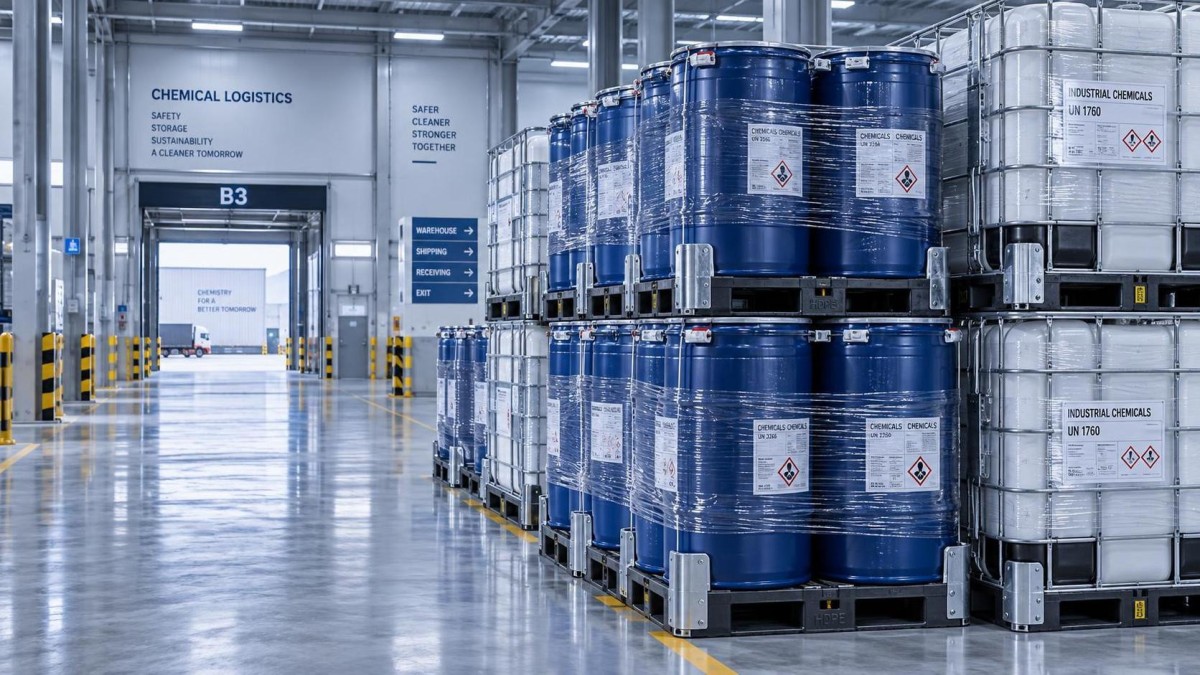
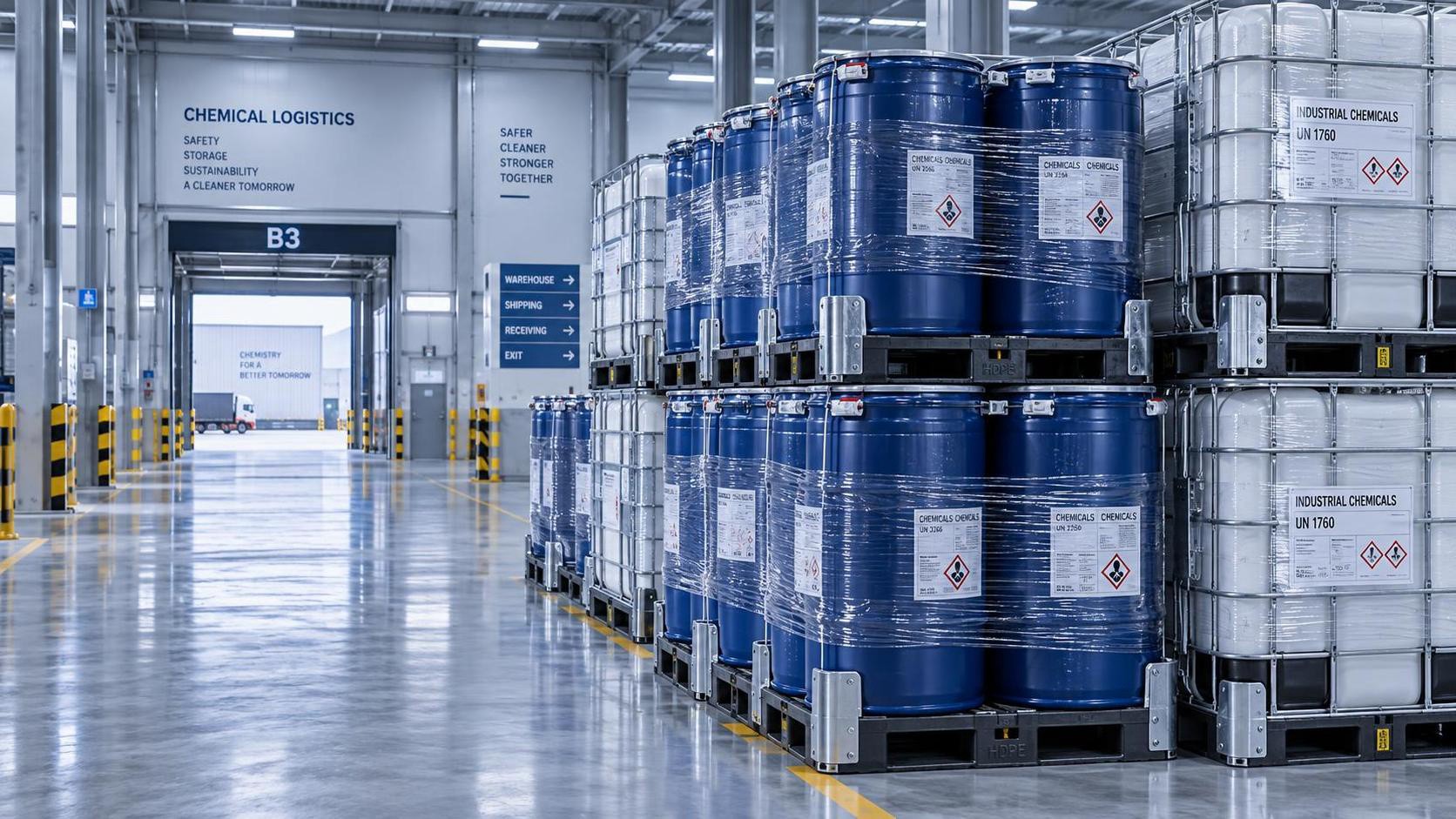
Transport risk is a system problem: primary pack, overpack, and load restraint
A chemically compatible container can still fail during transport if it is poorly protected against the forces of loading, stacking, vibration, shock, and movement within the freight unit. Custom Chemical Packaging is most effective when it treats the shipment as a layered system rather than a single vessel.
The primary package holds the product. Secondary containment or an overpack may provide an additional barrier, consolidate smaller packages, or protect against puncture and handling damage. The outer transport configuration controls how the shipment behaves on a pallet, in a truck, in a freight container, or during air handling.
The appropriate design depends heavily on the transport path. A package moved by dedicated road transport over a short distance encounters a different risk profile from one that is transferred through ports, consolidated with other cargo, stored temporarily in a humid warehouse, and delivered to a remote construction or processing site. Sea freight can introduce extended vibration, salt-laden environments, temperature variation, and stacking pressure. Air shipments face pressure and handling considerations as well as more restrictive dangerous-goods requirements. Rail and road movements introduce their own acceleration and impact conditions.
Load stability should therefore be specified, not assumed. Relevant questions include whether the pallet can support the gross weight without deflection; whether drums or pails require chocks, corner protection, or anti-slip surfaces; whether stretch wrap is compatible with the package geometry; whether straps can deform containers; and whether the stack pattern remains stable after partial unloading or warehouse movement.
For intermediate bulk containers, protection against forklift impact, valve damage, and shifting is especially important. A valve positioned near the base may require guards or a pallet design that prevents contact with forks. For smaller inner containers, an outer carton is not merely a shipping box; its divider system, absorbent material where appropriate, orientation control, and compression strength may determine whether the primary containers survive the journey.
Compliance cannot be added with a label at dispatch
Transport compliance starts with correct classification and packaging authorization. Labels, marks, declarations, and safety documents are essential, but they do not make an unsuitable container compliant. If a substance is regulated as dangerous goods, the packaging must match the relevant classification, packing group where assigned, physical state, and transport mode.
International movements may involve the UN Model Regulations and mode-specific frameworks such as the IMDG Code for sea transport, ICAO Technical Instructions and IATA Dangerous Goods Regulations for air transport, ADR for road carriage in much of Europe, and RID for rail transport in applicable jurisdictions. National rules can add local requirements. The governing requirements depend on the route, the consignor and carrier arrangements, the product’s classification, and whether an exemption or special provision applies.
Where UN specification packaging is required, the package marking indicates that the packaging design has been tested to the relevant performance standard under defined conditions. It is not a blanket approval for every chemical or every filling configuration. The marked packaging type, performance level, maximum gross mass or relative density, and packaging group capability must be read alongside the applicable packing instruction. A tested drum can be used incorrectly if the wrong closure is fitted, the permitted fill limit is exceeded, the prescribed inner packaging is omitted, or the package has been materially altered.
For project schedules, the important issue is timing. Classification, package selection, and label artwork should be resolved before procurement and filling are committed. Late discovery that an air shipment needs different packaging, that a destination requires local-language hazard communication, or that the selected container lacks the required approval can delay mobilization more than the cost of the packaging itself.
Compliance review should also cover the information that travels with the package. The chemical name, UN number where applicable, hazard labels, orientation arrows when required, net quantity, batch identification, handling instructions, and safety data documentation must remain consistent. A discrepancy between the shipping paper, label, safety data sheet, and actual product can create an operational stop even if the package itself is sound.
High-purity materials need a packaging specification beyond dangerous-goods rules
Industrial projects using catalysts, electronic-grade chemicals, analytical reagents, specialty monomers, or other sensitive materials may have stricter concerns than transport compliance alone. The packaging system can affect the material before it reaches the point of use.
Potential sources of quality loss include moisture ingress, oxygen exposure, light exposure, particulate shedding, container extractables, metallic contamination, residual cleaning agents, and cross-contamination from reused equipment. The risk is not identical across products. A moisture-sensitive powder may need a high-barrier inner liner and controlled sealing. A light-sensitive liquid may require opaque or UV-protective packaging. A solvent intended for trace-analysis work may need container and closure materials assessed for leachables relevant to the intended method.
These requirements should be translated into verifiable packaging controls. Vague instructions such as “use clean containers” are difficult to execute consistently. A usable specification identifies the acceptable container material, cleanliness condition, liner type, sealing method, maximum storage period where relevant, required inerting or moisture barrier, and any batch-level documentation needed to release the shipment.
There is also a practical distinction between new and reconditioned packaging. Reconditioned drums can be appropriate for certain applications when permitted and properly managed, but they may not be suitable where residue control, trace contamination, cosmetic condition, or demanding purity criteria are central to the project. The decision should follow the product risk profile rather than a general preference for one option.
Packaging customization should be controlled through change management
Custom does not mean repeatedly reinventing the package. For recurring project materials, the strongest approach is to create a controlled packaging configuration that can be reproduced across orders and sites. That configuration should connect the chemical specification to the operational reality of filling, transport, storage, and site use.
A useful package specification normally records the product identity and hazard classification; approved container and closure components; nominal and maximum fill quantity; required headspace; package approval or performance requirement; label content and placement; pallet pattern; overpack instructions; transport modes; storage limitations; and inspection or release checks. Where the product is supplied to multiple destinations, country-specific labeling or documentation requirements should be managed as controlled variants rather than improvised at shipment stage.
Any change to concentration, supplier formulation, container source, closure supplier, pallet design, transport route, or shipment mode should trigger a review. A small packaging substitution can have disproportionate consequences. Changing a gasket compound may affect compatibility. Changing a bottle shape may alter carton fit and stacking strength. Changing from road-and-sea transport to air transport may make the original configuration unusable.
This control is especially relevant when procurement teams seek cost reductions through component substitution. Unit-price savings can be outweighed by rework, rejected cargo, cleanup costs, product loss, site disruption, or a missed project window. The comparison should be based on total exposure, not the price of the empty container.
Inspection should test the controls that actually prevent failure
Visual inspection alone cannot confirm packaging suitability, but it remains an important final barrier. Release checks should be linked to the failure modes identified during package design. Depending on the product and route, this can include verification of correct container type, lot traceability, fill weight, closure torque, seal presence, label accuracy, dangerous-goods marks, pallet integrity, and photographic records of the completed shipment.
For higher-risk materials, leak testing, pressure testing, seal-integrity checks, or sampling controls may be warranted where they are technically appropriate and consistent with the package design. The critical point is that inspection criteria must be defined before dispatch. Discovering a missing label, loose bung, incompatible overpack, or unstable pallet after cargo has reached the carrier terminal creates a much narrower set of options.
Receiving-site conditions should not be ignored. Packaging selected for transport can be compromised after delivery if unloading equipment is unsuitable, storage temperatures exceed the package’s design assumptions, or opened containers cannot be resealed properly. Where materials are delivered in project quantities but consumed in smaller increments, the package should support safe dispensing and interim storage rather than forcing ad hoc decanting on site.
What a defensible packaging decision looks like
A defensible decision does not begin with the question, “Which drum is available?” It begins with whether the package preserves the chemical, contains foreseeable release scenarios, meets the transport requirements for the actual route, and can be handled safely at both ends of the shipment.
The most reliable packaging choices make those assumptions explicit: what the chemical can contact, how long it will travel, what temperatures it may encounter, which regulations apply, how it will be restrained, and how it will be opened and used. When those conditions are documented and controlled, custom chemical packaging becomes a practical risk-management tool rather than a late-stage logistics detail.